With the rise of cryptocurrencies and blockchain technology, a new concept is changing how we interact with the internet: blockchain domains. This is more than just a new URL suffix; it represents a revolution in digital identity and web ownership. This article will provide an in-depth look at what blockchain domains are, how they differ from traditional ones, and how you can own and use one.
What is a Blockchain Domain?
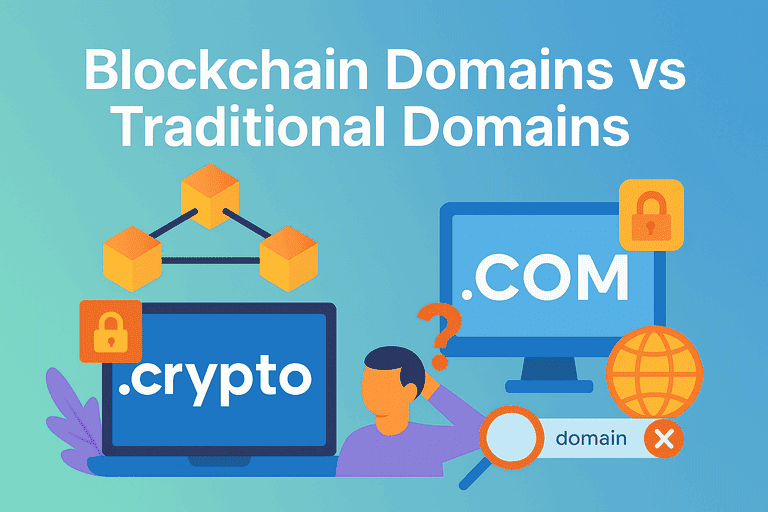
A blockchain domain (e.g., .eth, .bit, .sol) is a naming system built on blockchain technology. Unlike traditional domains (like .com, .org), which are stored on servers managed by centralized authorities (like ICANN), a blockchain domain is recorded on a public blockchain as a Non-Fungible Token (NFT).
What does this mean?
- True Ownership: When you register a blockchain domain, you don’t “rent” it—you truly “own” it. It’s held in your personal crypto wallet as an NFT, and only you (the holder of the private key) can control, transfer, or sell it.
- More Than a Website Address: Beyond pointing to a decentralized website, a blockchain domain’s more powerful function is to act as a human-readable universal address. You can link it to your long, complex cryptocurrency wallet address. This way, when someone wants to send you funds, they no longer need to copy and paste an address like
0xab12...cd34. They can simply typeyourname.eth, which greatly simplifies the process and reduces the risk of errors. - Universal Digital Identity: It can serve as your universal username in the Web3 world, allowing you to log into various decentralized applications (dApps) without creating a separate account and password for each one.
How Does It Differ from a Traditional Domain? Advantages & Challenges
Blockchain domains and traditional domains differ significantly in their underlying logic and use cases.
| Feature | Traditional Domains (.com, .net) | Blockchain Domains (.eth, .bit) |
|---|---|---|
| Ownership | Rented. Managed by registrars like GoDaddy or Namecheap; requires periodic renewal. | Owned. Exists as an NFT in the user’s wallet; typically a one-time purchase or long-term validity. |
| Control | Centralized. Controlled by ICANN and domain registrars; can be censored or revoked. | Decentralized. Managed by the blockchain network and smart contracts; censorship-resistant, with the user having absolute control. |
| Functionality | Primarily points to a web server’s IP address. | Points to wallet addresses, decentralized websites (IPFS), profiles, etc.; serves as a multi-functional digital identity. |
| Payment | Fiat currency (USD, EUR, etc.), with annual renewals. | Cryptocurrency (e.g., ETH), usually a one-time registration fee (though some require renewals). |
Advantages
- Censorship Resistance: Due to its decentralized nature, no government or corporation can easily shut down or seize your domain.
- Simplified Payments: Replaces complex wallet addresses with simple names, making crypto transfers as easy as sending an email.
- Enhanced Security: Ownership is secured by cryptographic private keys, eliminating the risk of domain theft or malicious transfers (as long as the private key is secure).
- Unified Identity: A single domain can act as your passport across all Web3 applications.
Challenges
- Accessibility Barrier: Currently, most mainstream browsers (like Chrome, Safari) cannot resolve blockchain domains directly. Users need to use supported browsers (like Brave, Opera) or install specific browser extensions.
- User Experience: The registration and management process requires users to understand concepts like crypto wallets, seed phrases, and gas fees, which can be unfriendly to beginners.
- Immature Ecosystem: The toolchain for developing, hosting, and using decentralized websites is still evolving and is not as mature as the traditional internet.
How to Register and Use a Blockchain Domain?
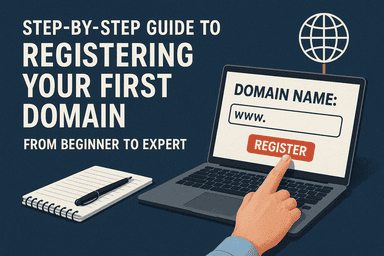
Registering a blockchain domain typically involves three steps: getting a wallet, preparing cryptocurrency, and choosing a registration service. Let’s use the most popular .eth domain as an example.
Registration Steps
- Get a Crypto Wallet: First, you need a non-custodial crypto wallet. The most common choice is MetaMask, a convenient browser extension wallet. Install it and create your wallet, making sure to securely back up your seed phrase.
- Buy Ethereum (ETH): You will need ETH to pay for the
.ethdomain registration and the network transaction fee (Gas Fee). You can buy ETH on a cryptocurrency exchange and transfer it to your MetaMask wallet. - Visit the ENS Service Website: Go to the official website for the Ethereum Name Service:
app.ens.domains. - Search and Select a Domain: Enter the name you want in the search bar. If the domain is available, you can proceed with the registration. You can choose the registration period; the longer the period, the higher the cost.
- Complete the Registration:
- Click the “Register” button. Your MetaMask wallet will pop up with a request to confirm a transaction. This is to ensure no one else is trying to register the same name at the same time.
- After the first transaction is confirmed, you will need to click “Register” one more time to finalize the process and pay the domain fee plus the gas fee.
- Once the transaction is complete, the
.ethdomain (as an NFT) will appear in your wallet!
How to Use It
- Set Reverse Record: In the ENS management interface, you can set your domain as the “primary name” for your wallet address. Once set, many dApps will display your
.ethname instead of the long address. - Receive Cryptocurrency: Tell your friends they can send crypto directly to
yourname.eth, and the funds will arrive at the address you’ve linked. - Create a Decentralized Website: You can point your domain to content hosted on IPFS (InterPlanetary File System) to create a truly decentralized and censorship-proof personal website or blog.
- Use as a Web3 Username: On dApps and services that support ENS login, you can connect and sign in directly using your
.ethdomain.
Blockchain domains are more than just a technological trend; they are a significant exploration into the future shape of the internet. They return power and ownership from centralized entities to individual users, laying the foundation for a more open, free, and user-sovereign digital world. While challenges remain, as the technology and ecosystem mature, your blockchain domain could very well become one of your most important assets in the digital world.